Education top picture

Education Front Page

Good quality, free primary education is a right of all children. A quality education – one that encourages children’s participation and critical thinking and is infused with the values of peace and human dignity – has the power to transform societies by:

• contributing to economic development and poverty relief;

• contributing to social stability by enabling people to transform their own lives and the society in which they live;

• promoting health – in Africa, for example, children of mothers who received five years of primary education are 40 per cent more likely to live beyond age five; and

• equipping children with the skills they need to protect themselves and be active citizens – for example, education can help children to protect themselves from HIV and AIDS and the dangers of child trafficking.

In 2000, 189 United Nations Member States pledged to achieve universal primary education by 2015 (Millennium Development Goal 2). However, although progress has been made towards this goal 7 years from its target date of 2015, 72 million children remain unable to access primary education. Many millions more are forced to drop out of school before they can complete their education. For those children who do go to school, very large class sizes, poor teacher training and a lack of resources such as text books can reduce the quality of education and the likelihood of obtaining a full and effective primary education.


GCE

World Vision, as a member of the Global Campaign for Education (GCE) recommends five actions DFID should take to better realise its commitment to achieving universal primary education by 2015. These are:

• triple the rate at which it is spending its promised £8.5 billion on in aid to education in the next two years in order to meet its commitment to spend this amount by 2015;
• ensure that the aid it gives to education is more stable so developing countries can effectively implement their education plans;
• increase education aid to those countries furthest from achieving the education MDGs;
• ensure that the development and annual review of national education policy effectively  addresses issues of quality, equity and inclusion;
• engage more with the macro-economic context in partner countries to ensure that the delivery of quality education is not impeded by macro-economic constraints.

For more information on these recommendations, click here for the latest GCE UK publication ‘The Final Countdown’.

Click here to visit the Global Campaign for Education UK’s 'Send My Friend to School' website and find out how you can get involved.


Education photo caption

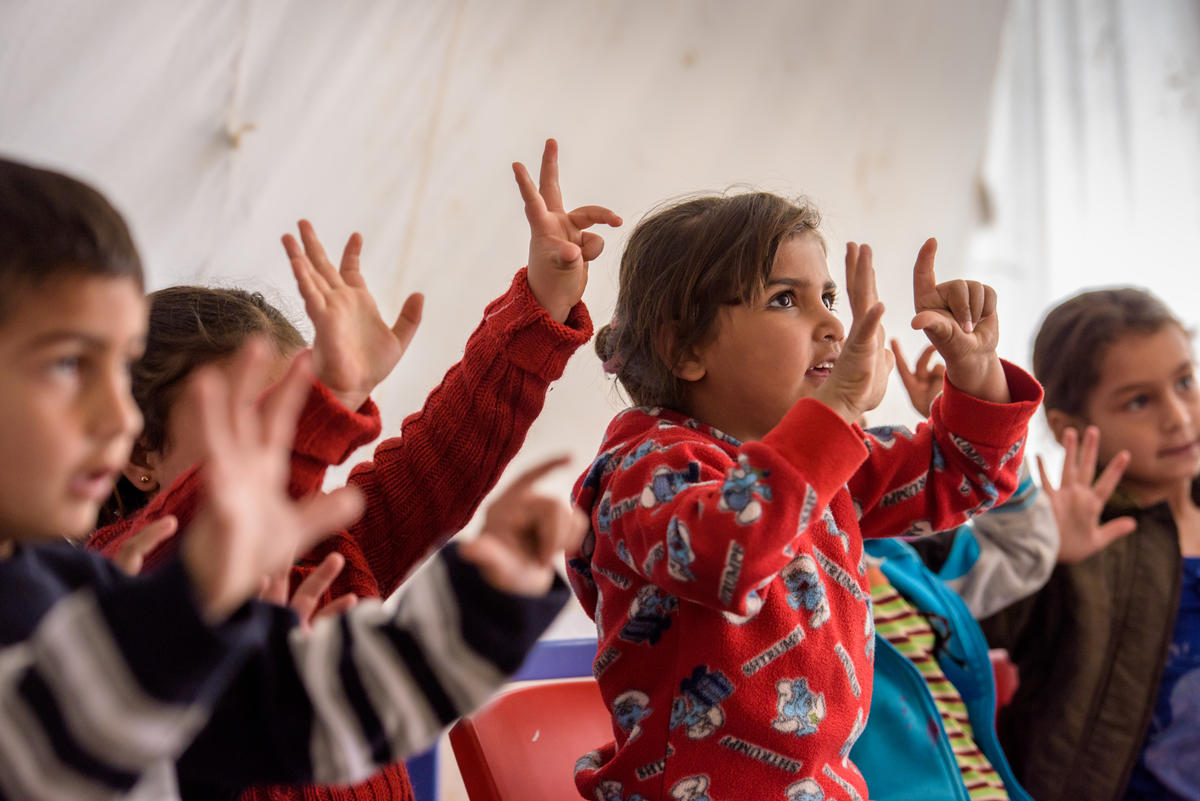
Students in a Dari language class at a Girls School in Qala-i-Naw, in western Afghanistan. World Vision advocates for all children to have access to school, including those who would traditionally be excluded by their community due to gender, disability, ethnic race or linguistic group.

Photo: Mary Kate MacIsacc/World Vision


UK Gov & primary education

What we want the UK Government to do to help achieve universal primary education by 2015

The UK Government has played a vital part in securing the global commitment to dramatically expand educational opportunities for primary-aged children. Its international policy leadership and dialogue, funding commitments and other support to developing countries has helped to secure significant improvements in educational provision in general and in primary school enrolment rates in particular.

But a number of key challenges remain for the UK Department for International Development (DFID) if they are to be effective in playing their part in ensuring the target of universal primary completion by 2015, as expressed in MDG 2, and reaching gender parity in primary and secondary education, as expressed in MDG 3, are to be met.

2009 is the year to get all primary-aged children enrolled in school if they are to complete a course of free, good quality primary education by 2015.